




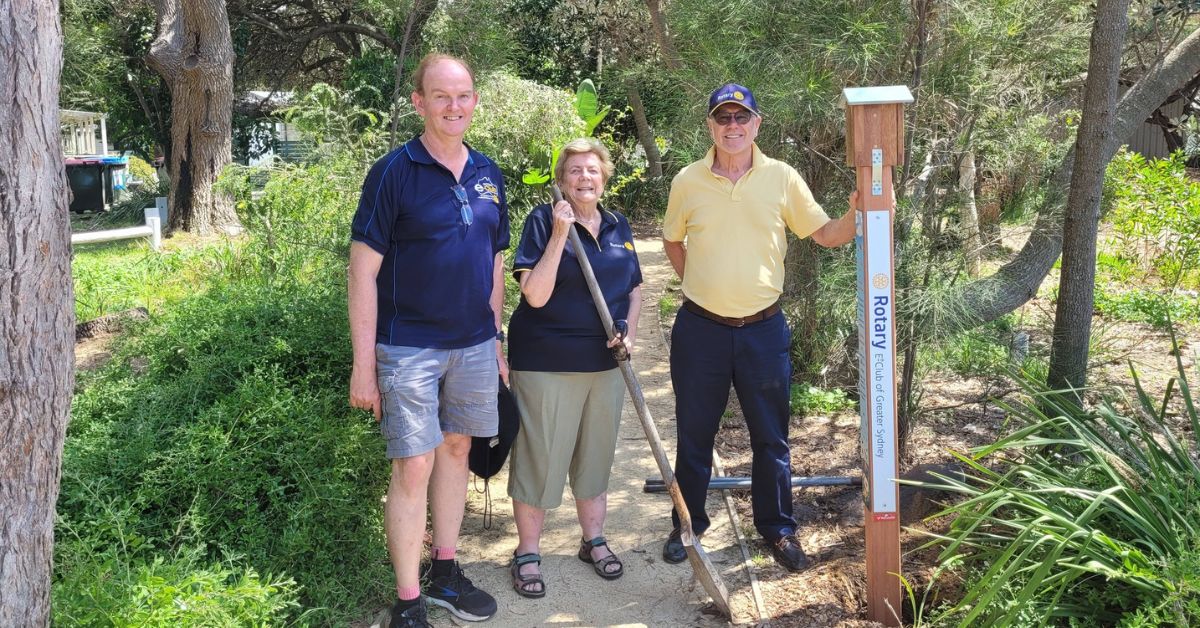
The Rotary E-Club of Greater Sydney has installed five Bee Poles at schools and community sites in NSW, including one at the Coastal Environment Centre in Narrabeen, as part of a project to protect Australia’s native bees and educate the next generation about their importance.
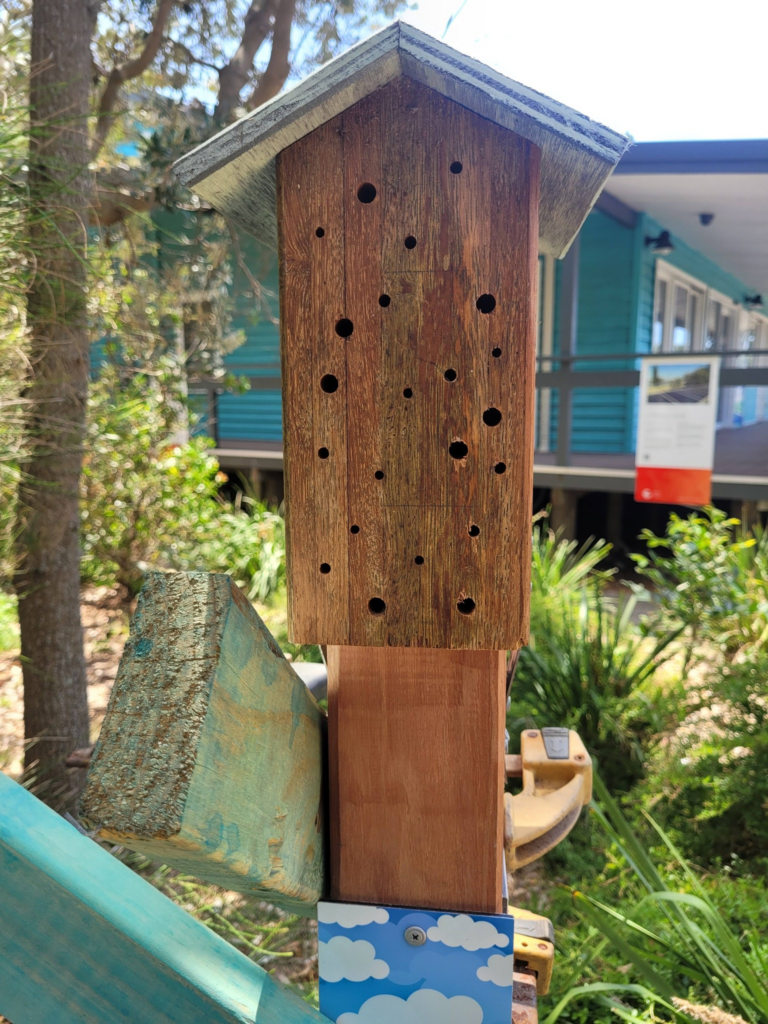
The poles, each topped with a handcrafted Bee Hotel designed to shelter solitary native bees, have been placed at Harbord Public School, Curl Curl North Public School, Kinma School, Tea Gardens Public School and the Coastal Environment Centre.
Each installation began with an Acknowledgement of Country read by a student, followed by a presentation on native bees, before students helped cement the pole in the ground and decorate the surrounding area with river pebbles or crushed rock.
The project has been years in the making. Judith Charnaud OAM, President and Environment Director of the Rotary E-Club of Greater Sydney, said the Bee Pole concept had taken shape over a year or two of designing, planning and construction.
The bee you probably walk past without noticing
Australia is home to approximately 1,500 native bee species, the vast majority of which live nothing like the hives most people picture.
Native bees are generally solitary, stingless and produce little to no honey. Some are as small as a fruit fly, and many spend their lives moving quietly between flowers and tiny nesting cavities in wood or soil, largely invisible to passing humans.
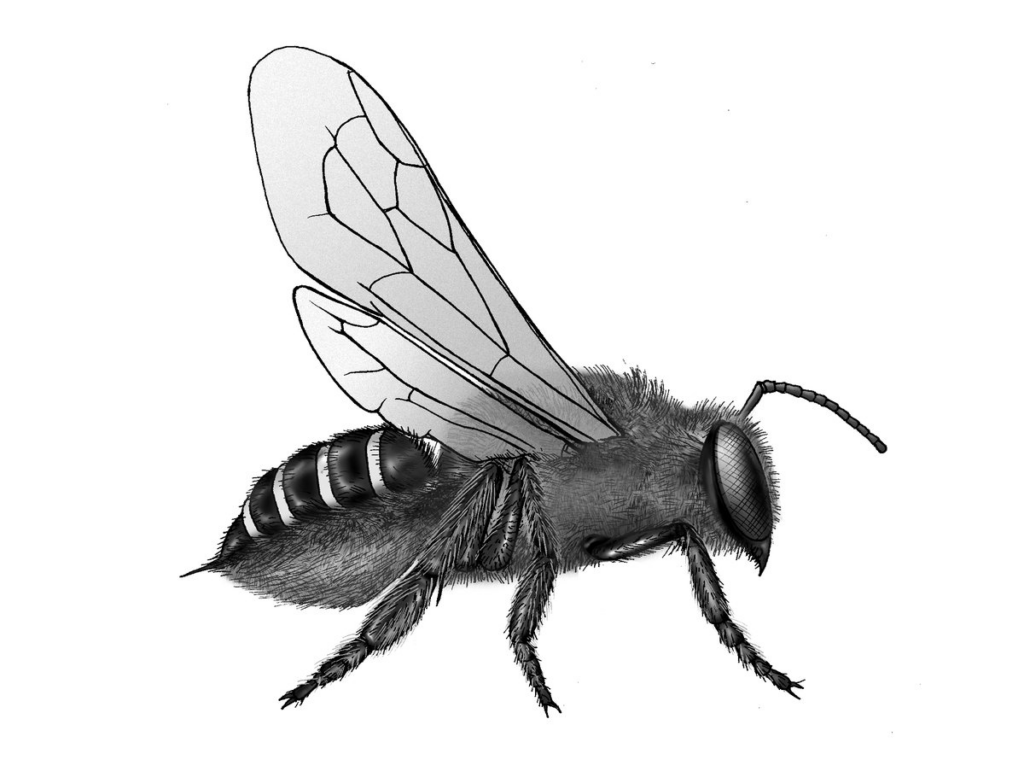
That invisibility is part of the problem. While people recognise the introduced European honeybee as “a bee,” they often have no idea that the insects visiting their garden are Australian natives performing the same pollinating work.
Some Australian bee species do live in hives and produce honey that scientists have recently found carries remarkable medicinal properties.
The Bee Hotel atop each pole addresses the nesting needs of solitary species. It is essentially a block of wood with straight holes of varying diameters bored into it, each sized to suit different bee species.
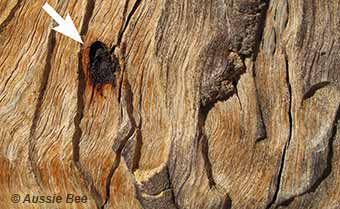
Students at each installation were fascinated, Charnaud noted, because none of them had ever thought of a bee hotel looking like that.
The case for protecting native bees
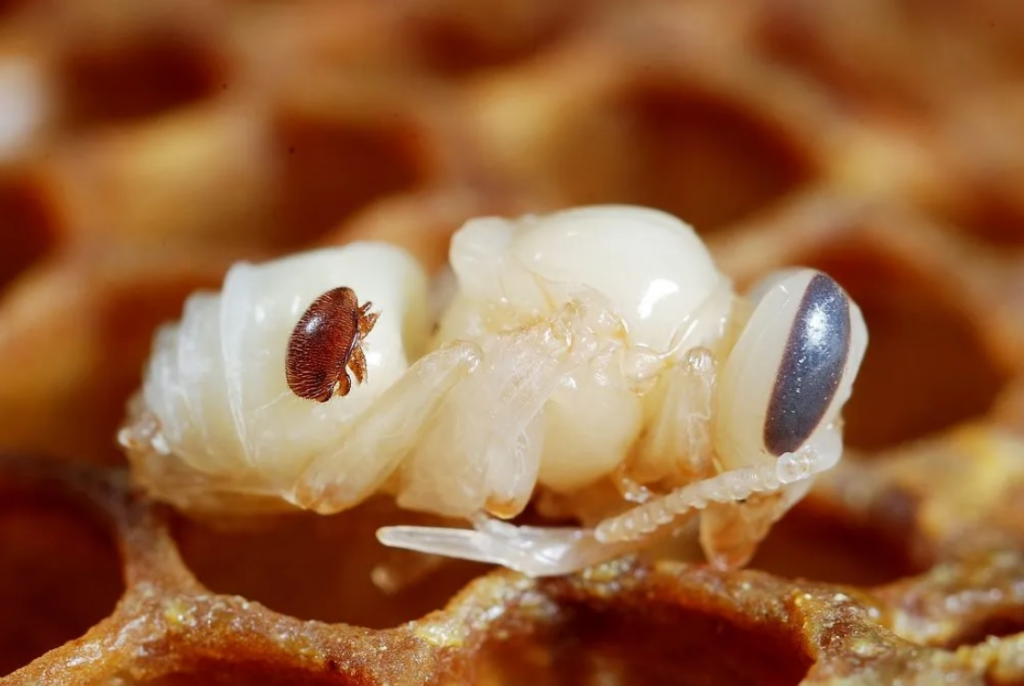
Bee populations worldwide are declining under the combined pressure of climate change, pesticide use, habitat loss, fewer flowering plants and disease. In NSW, the varroa mite, a destructive parasite that devastates honeybee hives, has now established itself in the state after its first detection in 2022, placing additional pressure on both managed and wild bee populations.
Pollinators, including bees, are responsible for approximately one in every three mouthfuls of food humans eat. Without them, crop yields fall, food prices rise and ecosystems lose a fundamental thread.
The Rotary E-Club of Greater Sydney is a member of Rotarians for Bees, an environmental action group operating under Rotary International’s umbrella that works to build awareness of pollinator decline and promote practical habitat solutions.
The club has been recognised as an Environmental Leadership Club for District 9685 and received the Gold Award for Environment in 2022-23, in part for this project.
The next stage of the bee pole project
Once the poles are cemented in place, students plant native flowering grasses and vines around the base to attract bees to the hotel. The poles are designed to become a lasting part of each school’s garden and curriculum, giving teachers a tangible reference point for lessons on ecosystems, food security and environmental stewardship.
Charnaud thanked club members Dee Stewart, Ross Johnson, Lucian Keegel, Lucy Hobgood-Brown, Marilyn Mercer and Geoff Appleton for their work installing the poles, and acknowledged the school students and staff for their enthusiasm throughout each visit.
The Coastal Environment Centre is at Pelican Path, Narrabeen. For more information about the Rotary E-Club of Greater Sydney’s environmental projects, visit their website or email Environment Director Judith Charnaud at jcharnaud@yahoo.com.au.
Published 2-June-2026