





For many Narrabeen residents, the water has long since receded, but the process of recovery is still very much underway. Weeks after intense storms swept through Sydney’s northern beaches in mid-January, insurers are working through a volume of claims from homeowners, landlords, and business operators in one of the region’s most flood-affected corridors.
Read: Narrabeen Residents Return Home After Emergency Overnight Evacuation
The January 17–18 event brought up to 200 millimetres of rain to parts of the northern beaches and Central Coast within a single 24-hour period, pushing water through streets and properties around Narrabeen Lagoon and triggering evacuation orders for residents and holidaymakers in low-lying suburbs.
Warnings were scaled back on January 18, but emergency services cautioned that floodwaters were likely to take several days to fully recede.
Narrabeen Flooding History
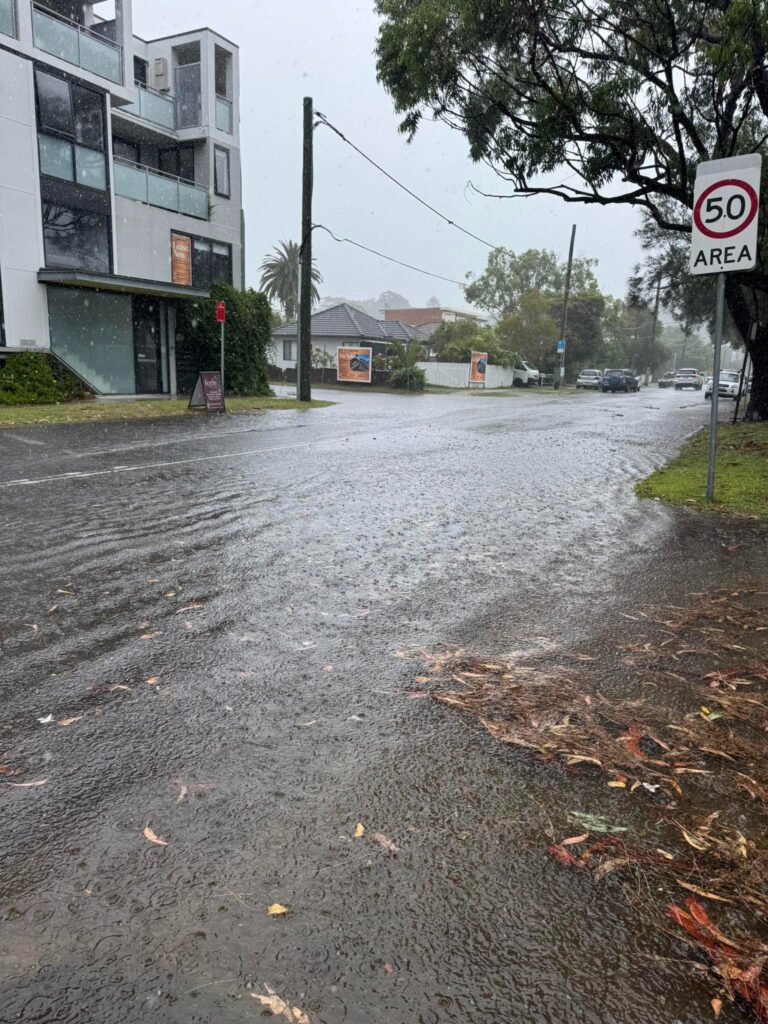
For locals, the January inundation was not without precedent. According to the NSW SES Flood Data Portal, the eastern sections of Narrabeen Lagoon sit directly adjacent to the suburbs of Narrabeen and North Narrabeen, and significant flooding of residential and commercial areas bordering the lagoon has occurred on a number of occasions.
Northern Beaches further notes that lagoon flooding occurs due to runoff after heavy rainfall and that water levels rise and spill onto the surrounding low-lying floodplain when the lagoon entrance cannot drain fast enough to keep pace with rising catchment flows.
It is a pattern that has shaped decades of floodplain management planning for the area, and one the January event reinforced with some force.
Insurers working through claims

With access to many properties delayed in the days following the storm, formal damage assessments are still rolling in. Insurers are reviewing potential claims exposure across home, contents, motor, and landlord policies as policyholders work through the process of documenting losses.
The scale of the emergency response gives a sense of what the claims workload may look like. The NSW State Emergency Service responded to more than 2,100 incidents across Sydney and surrounding areas by the morning of January 18, with around 1,000 volunteers deployed throughout the event.
Statewide, 25 flood rescues were carried out, many involving people trapped in vehicles on inundated roads. SES spokeswoman Emily Barton confirmed that high-clearance vehicles and flood rescue teams remained on standby across metropolitan Sydney and the Central Coast as rainfall continued.
Closer to home, the isolated northern beaches community of Great Mackerel Beach, accessible only by boat, suffered a landslide that damaged several homes and injured at least one person, adding further complexity to loss assessments across the region.
What drove the flooding
The Bureau of Meteorology attributed the event to a coastal trough that stalled over the Sydney and Central Coast region, directing repeated storm cells over the same catchments in quick succession.
For insurers, the Insurance Business Australia report noted the event underscores ongoing challenges around localised flash flooding, drainage capacity, and short lead-time convective events in densely populated urban areas.
What residents should know
For anyone yet to lodge a claim, financial experts advise policyholders to photograph all damage before beginning any clean-up, keep records of damaged items, and contact their insurer as soon as possible. It also notes that insurers should not ask for a detailed room-by-room list if they are satisfied a claim is a total loss.
Read: Unusual Wallaby Encounter Recorded At South Narrabeen Beach
It is also worth checking what your policy actually covers. According to the Insurance Council of Australia, flood cover is not automatically included in all home insurance policies, and the distinction between flood damage and storm or rainwater damage can affect whether a claim is approved. Policyholders are encouraged to read their Product Disclosure Statement carefully or call their insurer directly if they are unsure.
For a community that has lived alongside Narrabeen Lagoon long enough to know its moods, the insurance process is, for many, a familiar and unwelcome part of what comes after the water goes down.
Published 28-February-2026